
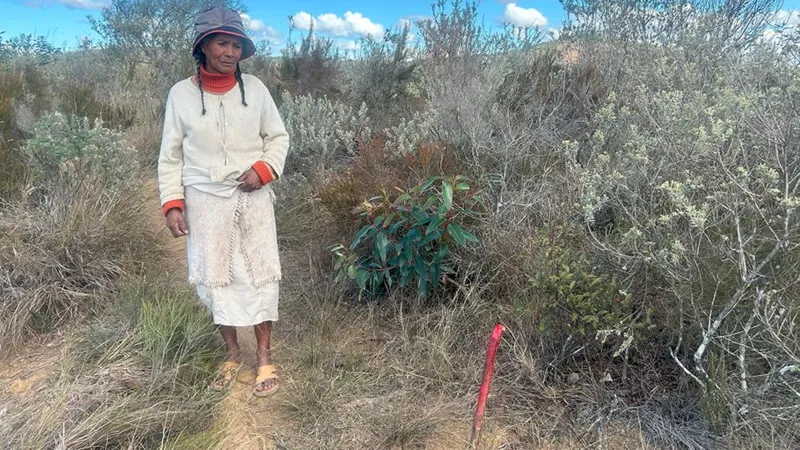
The red, wooden post hammered into the ground near the Malagasy village of Ambohidava heralds a change that will alter life here forever.
Visiting on a gentle, sunny Thursday afternoon, the only things disturbing the 500 residents are the crowing of cockerels and the occasional rev of a motorbike engine.
But the peace and tranquillity of rural life could well be shattered.
If plans go ahead then in two years’ time the village could be gone and in its place will be a two-lane toll road.
Currently Amboidava lies around a two-hour drive from the capital Antananarivo. But journey times could change as the planned highway linking the capital to Toamasina, the country’s main port and second city, goes right through the village.
The red post marks the route for the new road.
The fast road is envisioned to transform Madagascar’s economy but it will come at a cost to some.
The significance of the potential disruption on the villagers cannot be understated.
Neny Fara has lived in Ambohidava her entire life.
Now 70, she first started farming pineapples and rice with her family at the age of four. Her ancestors have farmed here for generations.
The first thing you notice about her is her smiling eyes.
A diminutive 1.5m (4ft 10in), she welcomes me into the house she shares with her husband Adrianavony and serves us a traditional Malagasy chicken and rice dish